
Commercial flood protection · Nationwide deployment
Commercial flood protection.Planned before the water arrives.
Texas Flood Fighters plans, prepares and deploys commercial flood-protection systems for facilities facing hurricane, river, storm and snowmelt flood risk.
- Commercial
- Nationwide
- Planning
- Deployment
- Training
What we actually do
We keep water out of operating facilities.
Texas Flood Fighters is a commercial flood protection and mitigation company. We document a flood mitigation action plan for a specific location, keep the equipment inspected and ready, deploy temporary barrier systems ahead of the event, action the equipment while water is up, and handle removal, cleaning, landscaping services as needed and proper storage afterwards.
This is not restoration work. Restoration begins after water is inside the building. Our work is the sequence that happens before that — assessment, planning, readiness, deployment and monitoring — for facilities where downtime, contents or continuity of service cannot be replaced.
Two ways we protect facilities
Readiness established early, or response mobilized now.
Planned protection
For organizations that want the plan, equipment and procedure settled before a forecast forces a decision. We deploy customer-owned or rented equipment, or Texas Flood Fighters equipment from limited tube stock; availability is confirmed for each engagement.
- Site assessment and flood exposure review
- Written, site-specific mitigation action plan
- Equipment readiness and inventory checks
- Facility team training
- Annual deployment planning and inspections
- Recurring readiness contracts
Emergency response
For an active or approaching threat, where sequence matters more than completeness and hours decide the outcome.
- Crew and equipment mobilization
- Rapid temporary barrier deployment
- Priority protection of critical openings and utilities
- Onsite monitoring, pumping and seepage management
- Post-event removal and recovery
The flood protection lifecycle
Equipment is one part. The operational lifecycle is the difference.
Manufacturers sell barriers. We run the cycle that keeps a property protected season after season — from the first site walk to storage after the last event.
- 01
Assess
Walk the property. Identify water entry points, elevations, drainage, utilities, water access and the assets that cannot get wet.
- 02
Plan
Document a site-specific flood mitigation action plan: barrier alignment, staging areas, deployment routes, equipment list and crew requirements.
- 03
Prepare
Inventory and readiness checks on equipment, pre-season inspections, and training for the facility team that will be onsite during the event.
- 04
Deploy
Mobilize crews and install the barrier system — dams, anchoring, pumps — in the alignment defined by the plan, ahead of the water.
- 05
Monitor
Stay onsite through the storm or river event where contracted, actioning equipment, managing seepage and adjusting to conditions.
- 06
Recover
Controlled drawdown, disassembly, cleaning, restoration and landscaping repair as needed, then proper storage of customer-owned equipment.
- 07
Maintain readiness
Annual inspections, plan revisions and predefined mobilization procedures under a long-term deployment agreement.
Services
Capabilities across the full protection cycle.
- 01
Commercial Flood Protection
Commercial flood protection is the practice of keeping floodwater out of an operating facility using a planned, site-specific barrier system that is deployed before water arrives — as opposed to cleaning up after it enters.
Read more - 02
Flood Mitigation Planning
A flood mitigation plan is a written, site-specific document that states how a particular property will be protected: where barriers go, what equipment is required, who deploys it, what triggers mobilization and what happens after the event.
Read more - 03
Flood Barrier Deployment
Flood barrier deployment is the onsite installation of a temporary flood-protection system — laying the barrier along a planned alignment, anchoring it, filling or ballasting it and staging pumps — so the perimeter is closed before water arrives.
Read more - 04
Tiger Dam Systems
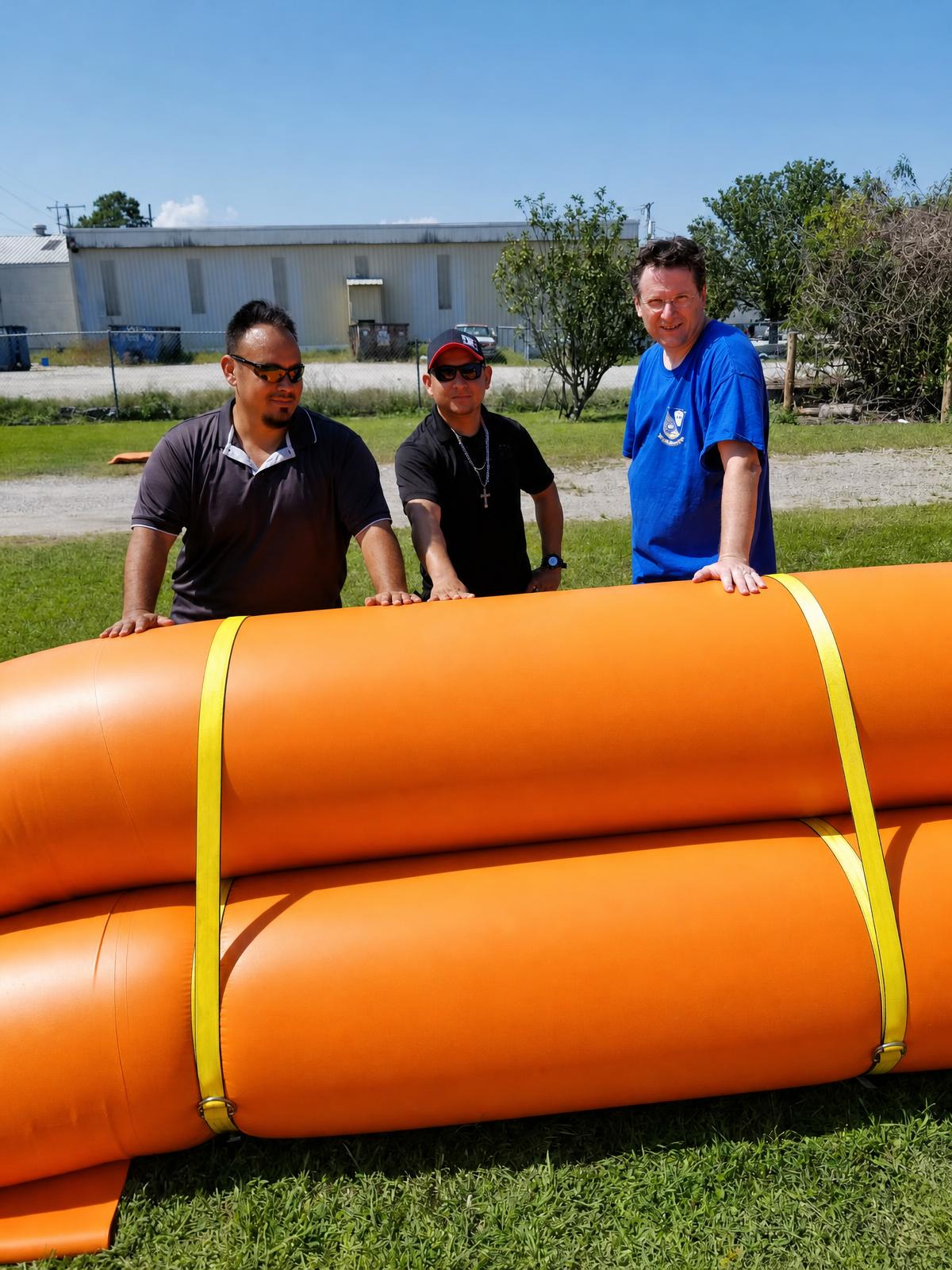
A Tiger Dam is a water-filled tube barrier system. Tubes are laid along the protection line, connected, filled with water and anchored, forming a reusable temporary dam that holds back floodwater without sandbags.
Read more - 05
Emergency Flood Response
Emergency flood response is rapid mobilization to a property with an active or imminent flood threat: assessing the exposure on arrival, deploying temporary barriers to the most critical openings first and managing equipment through the event.
Read more - 06
Flood Protection Training
Flood protection training prepares a facility's own staff to execute a deployment plan — recognizing triggers, handling equipment, following the barrier alignment and knowing their role during and after an event.
Read more - 07
Deployment Contracts
An annual deployment contract is a standing agreement that keeps a facility's flood plan, equipment and mobilization procedure current year-round, so a deployment is executed against an existing procedure instead of negotiated during a storm.
Read more
On site
Hospitals, substations, shorelines.
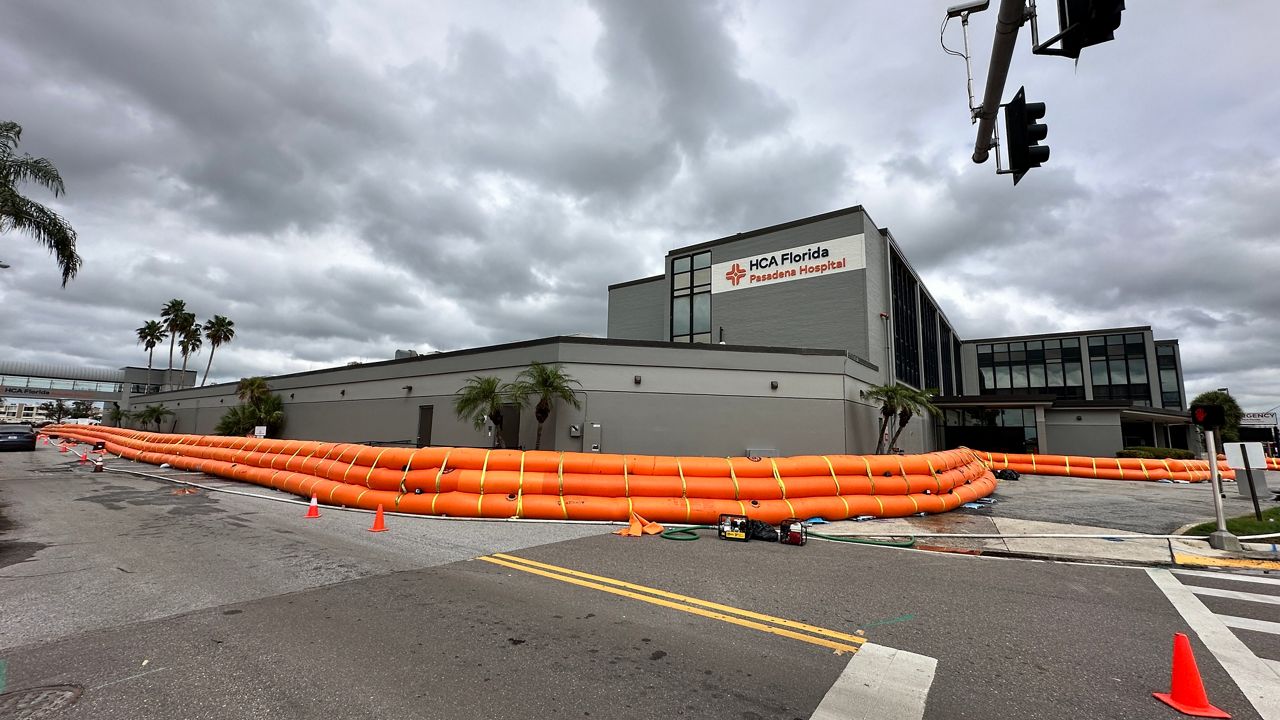
Commercial deployments by Texas Flood Fighters crews. Each frame is the site as it stood at the time. Crew leads Sean Wirth and Darrell Ford completed U.S. Flood Control's Tiger Dam installation training in 2017.
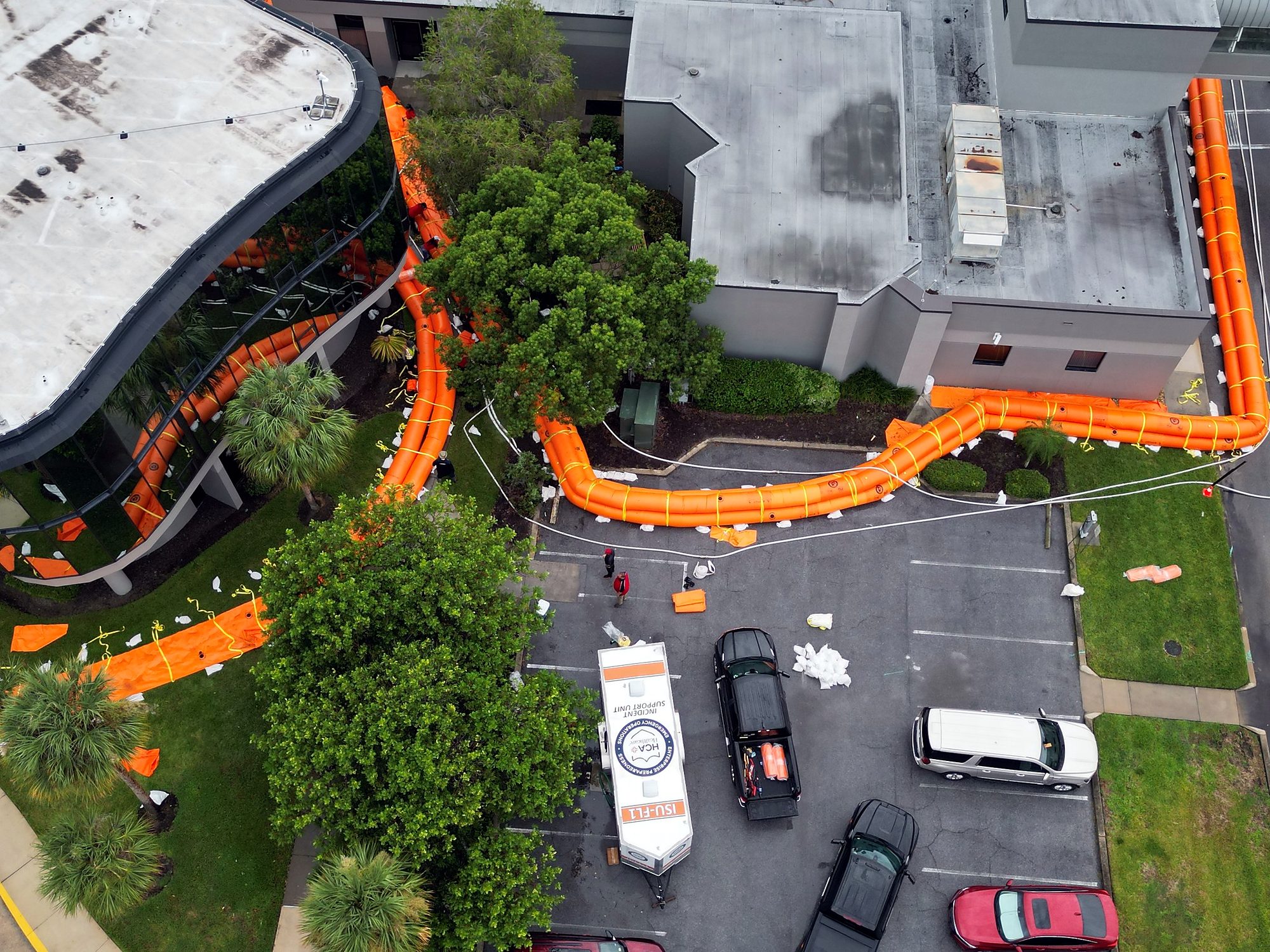
Hospital campus, Florida: Perimeter line set around a hospital campus ahead of Hurricanes Milton and Helene, 2024.
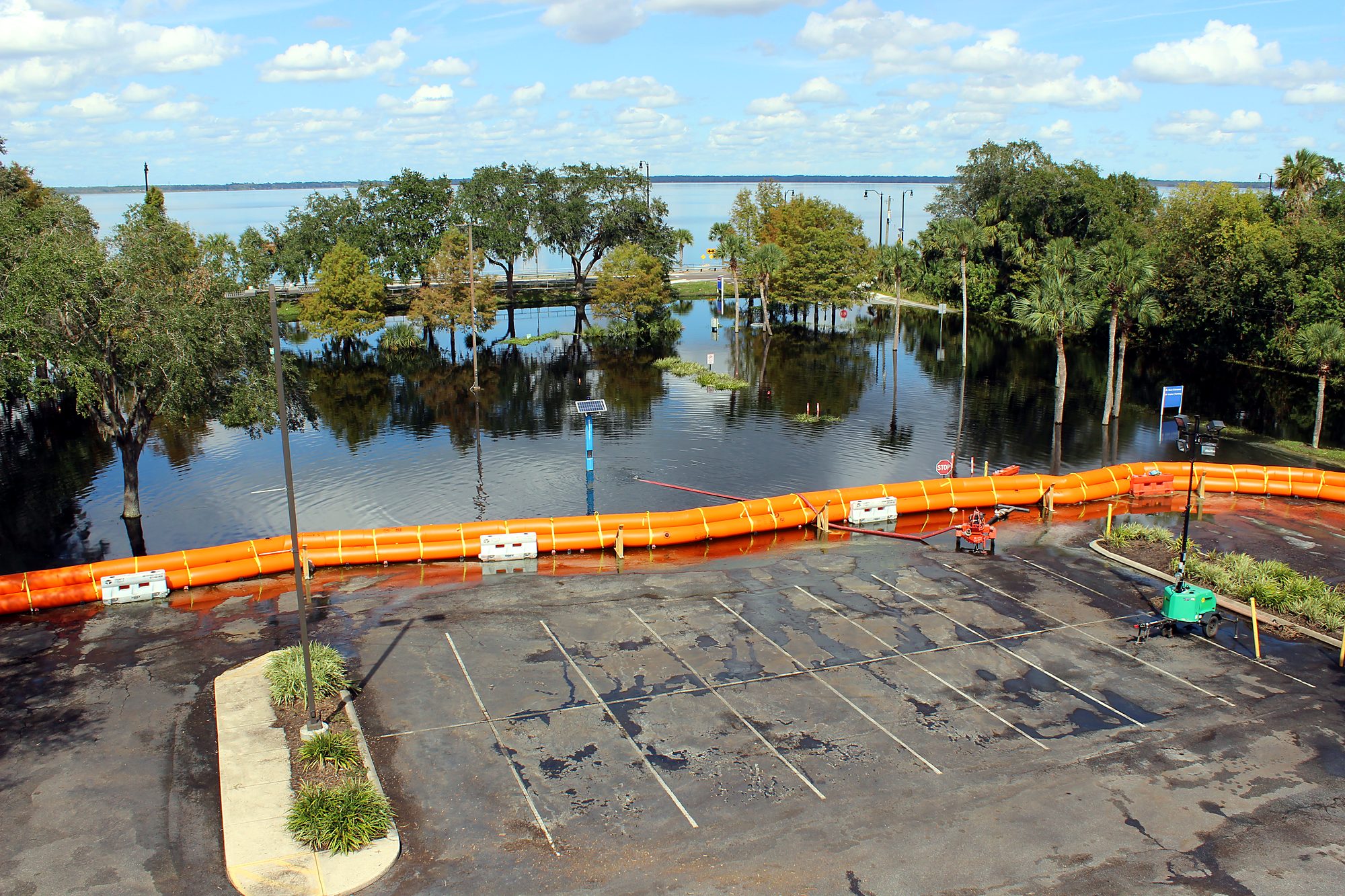
Hospital campus, 2022: Barrier line holding floodwater off a hospital parking lot.
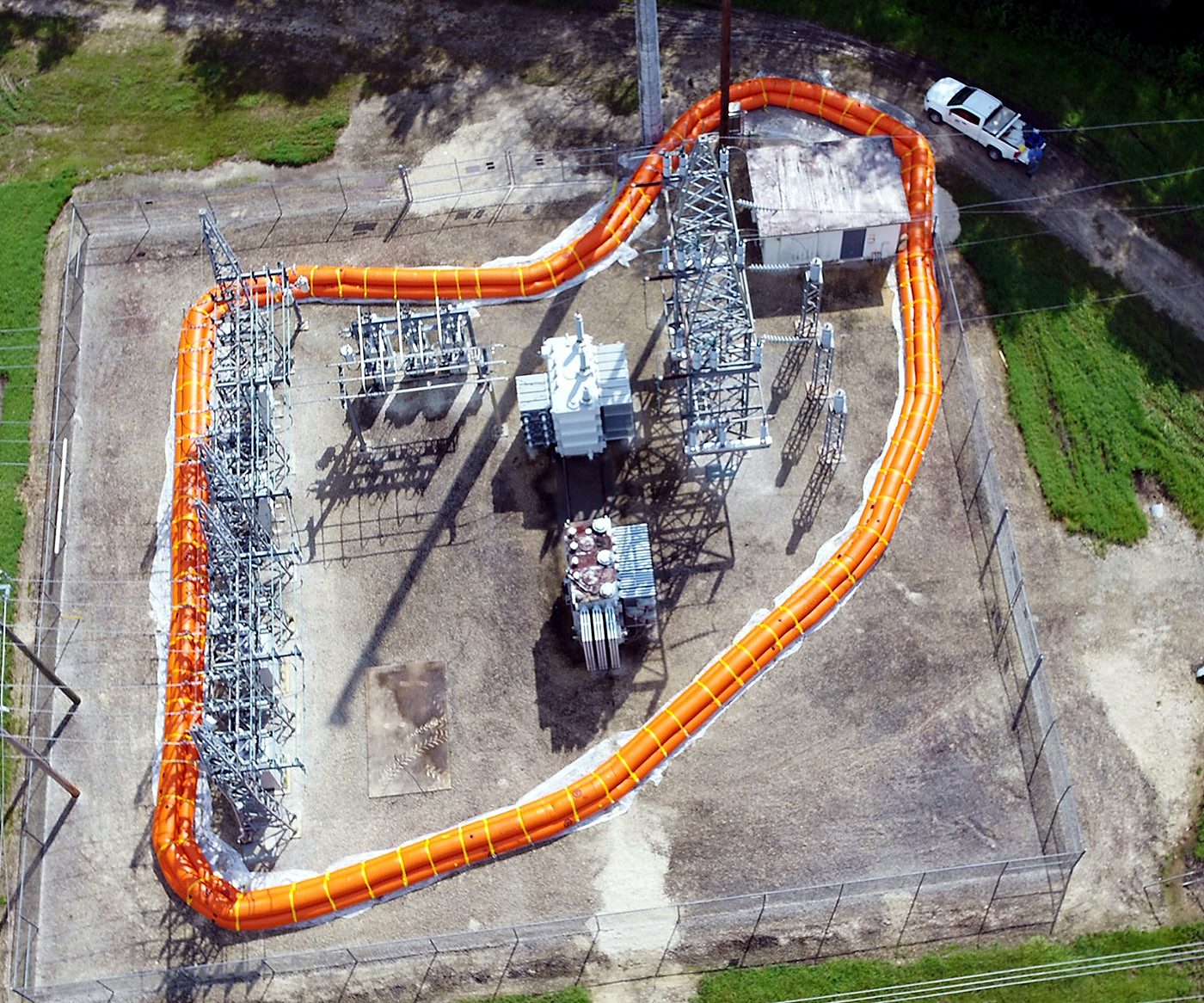
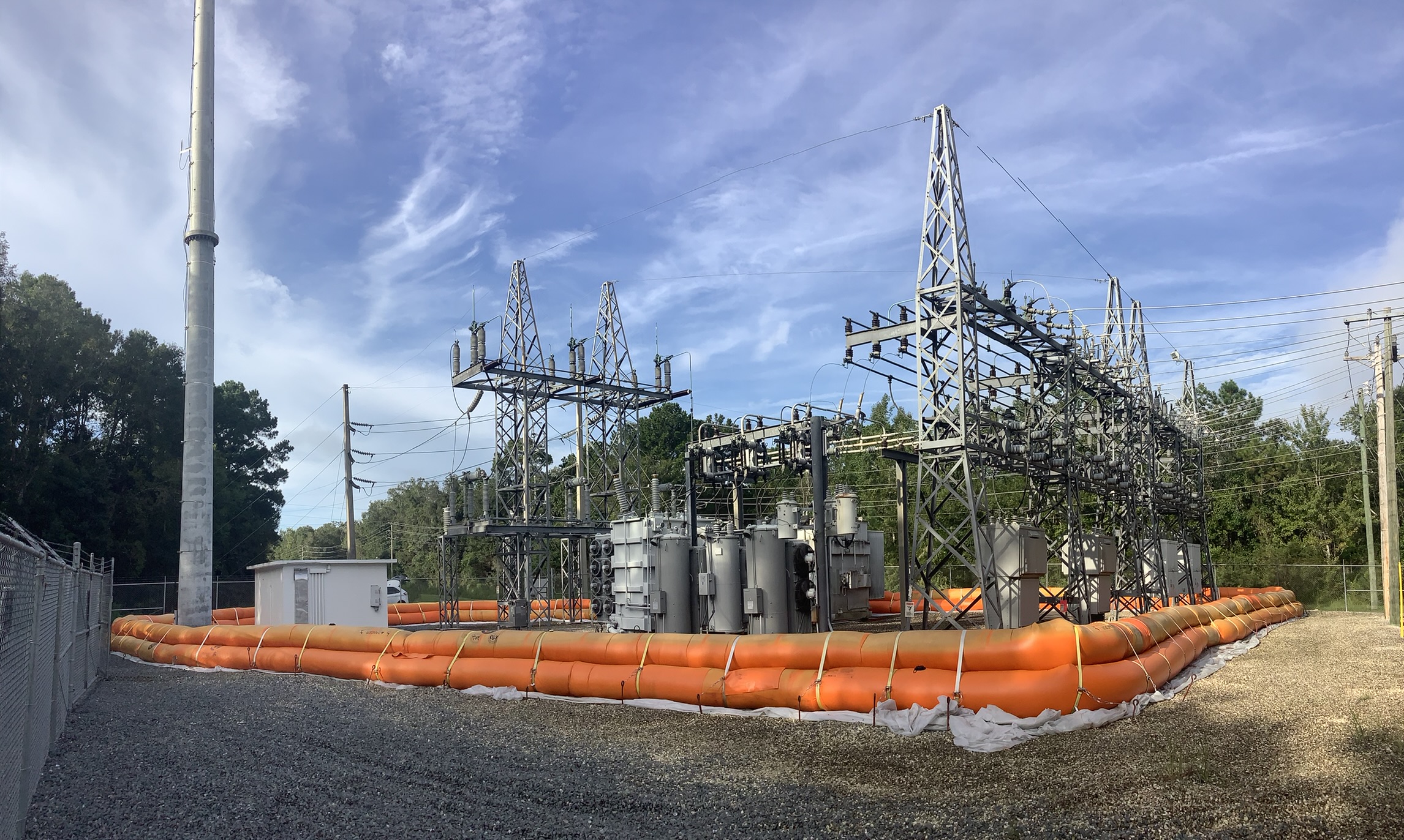
Electrical substation: Closed ring around a substation's transformers and switchgear.
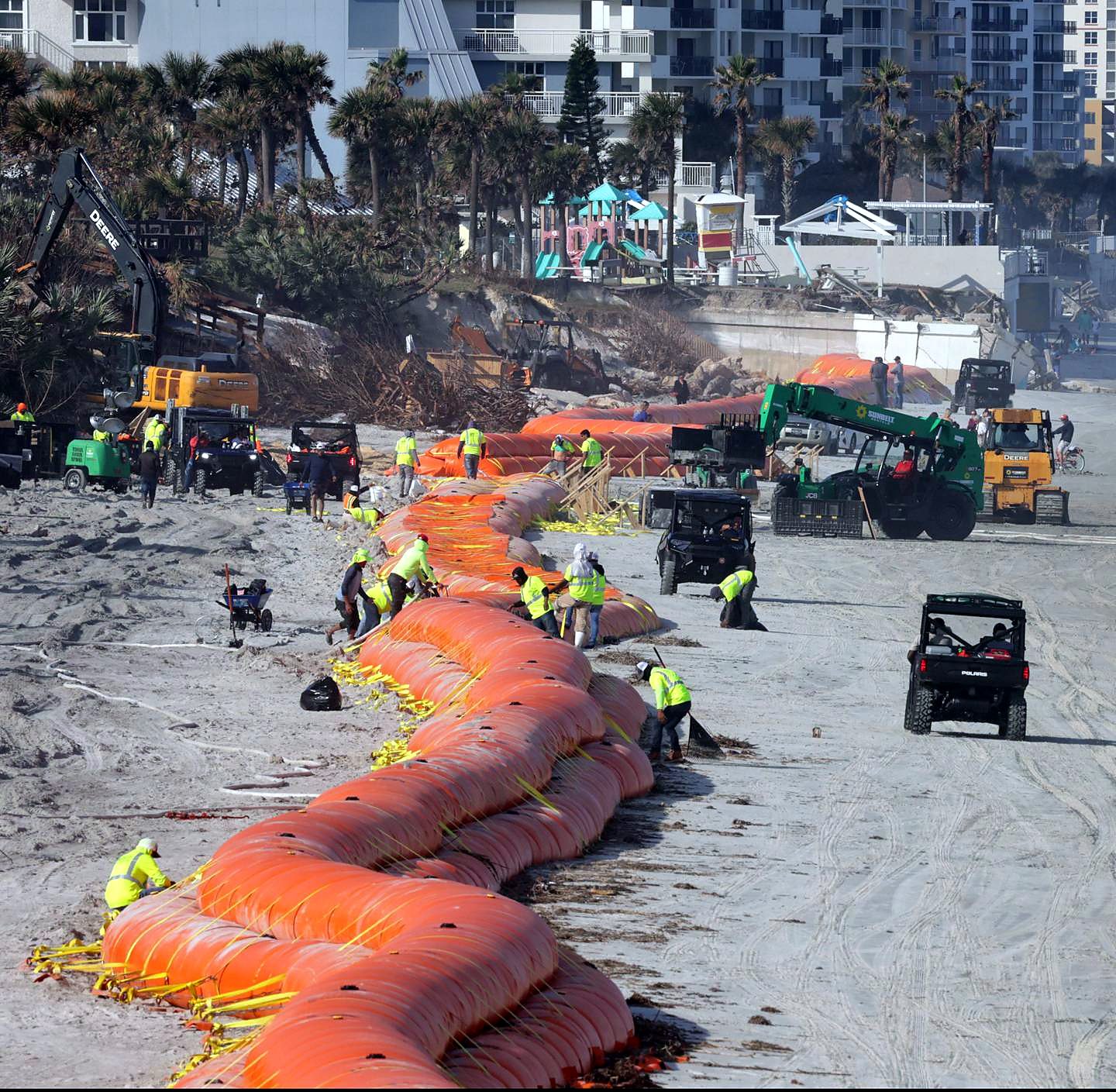
Oceanfront, Daytona Beach: Crews installing a beachfront line below storm-damaged dunes.
Where no plan was in place
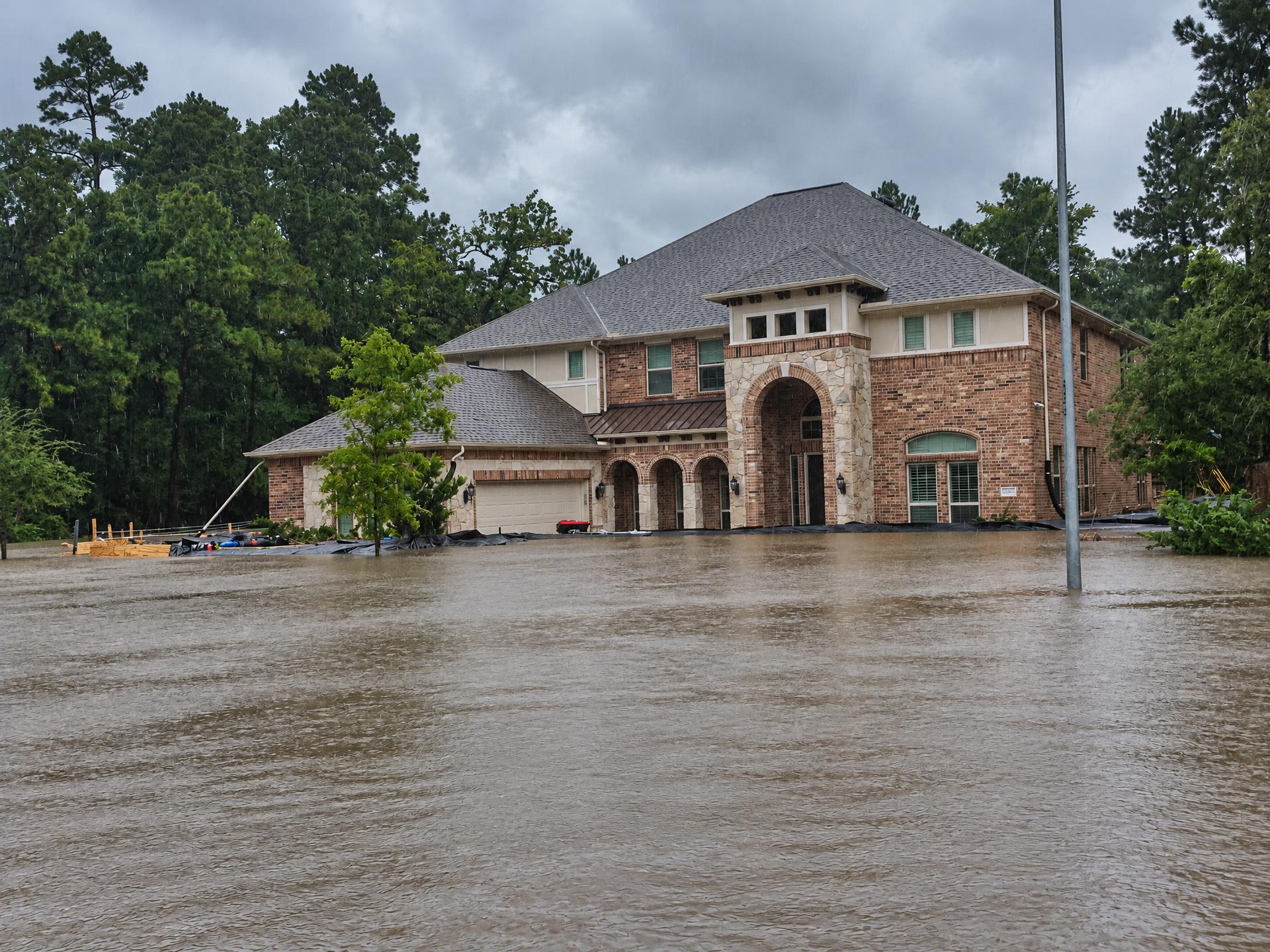
Rain still falling, water already across the lot.
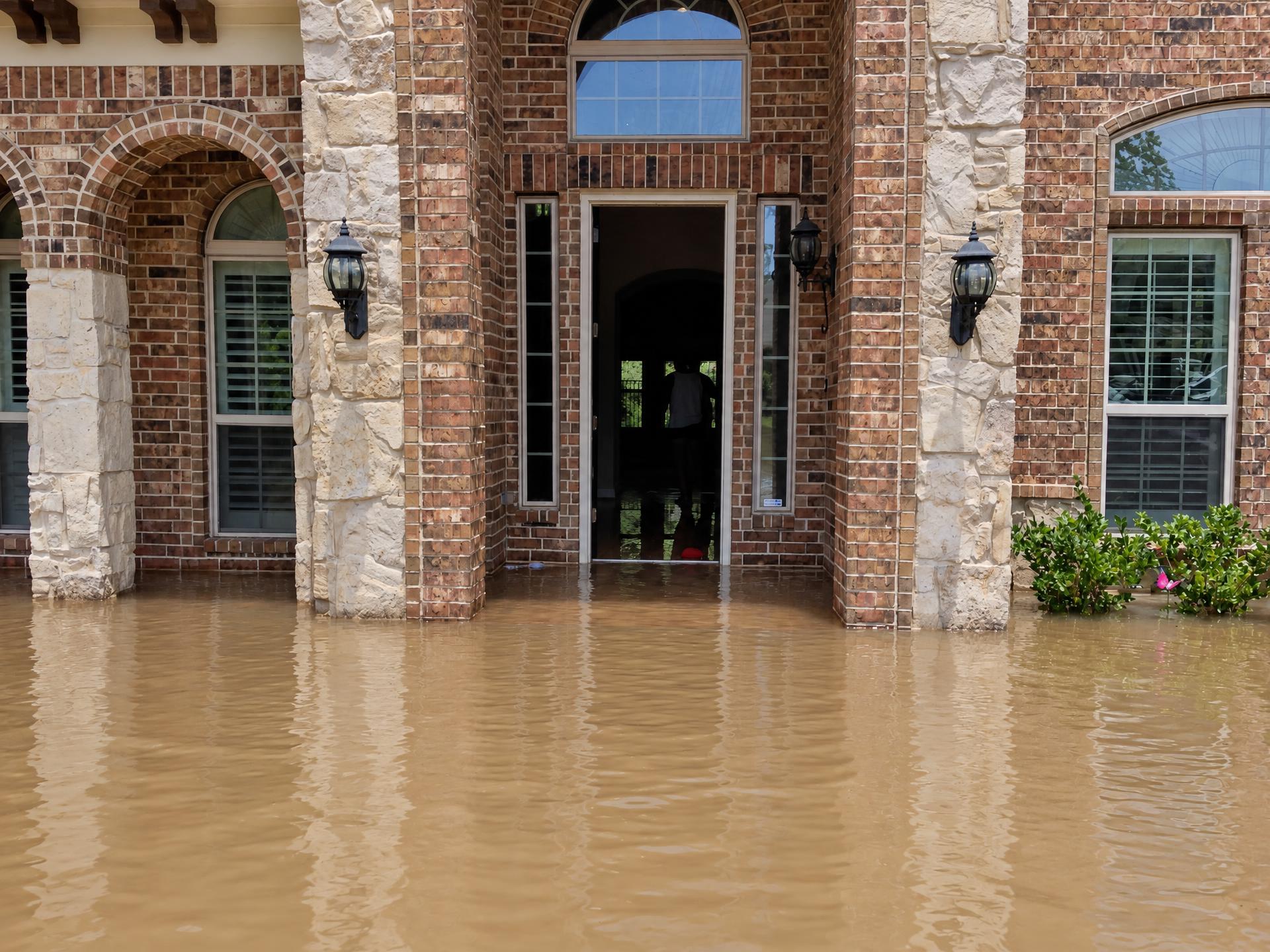
Water at the threshold where no protection was set.
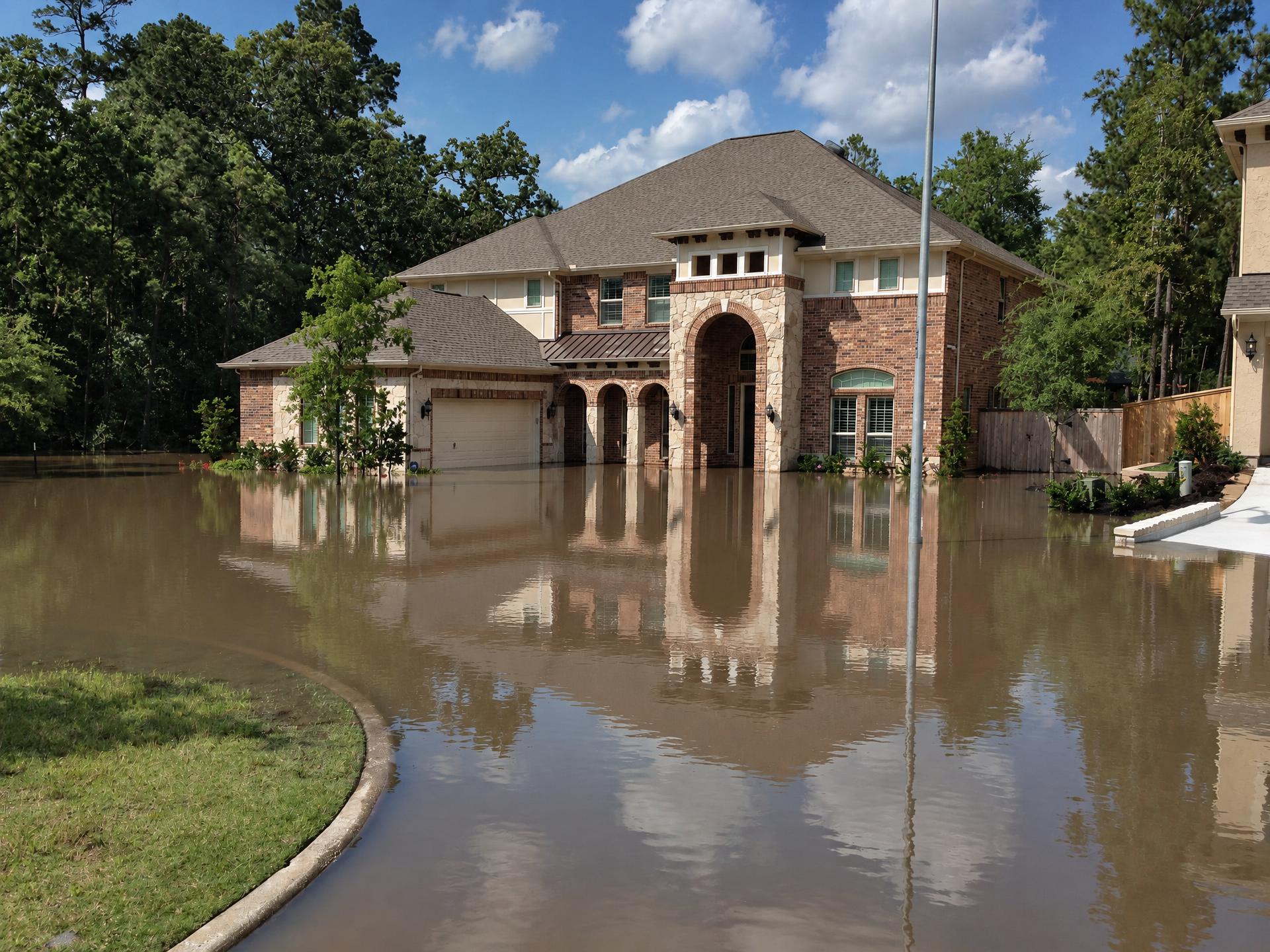
After the rain: standing water with nowhere to go.
The risk
Wind, surge, rainfall and inland flooding.
Hurricanes and heavy rain are financially and operationally devastating events. The cost of being unprepared is measured in billions nationally and in weeks of lost operations for a single site.
~$17B
Annual U.S. flood damage cost
Source: FEMA
64 days
Average shutdown for a flooded business to recover
Source: Client deck
$53,454
Damage from one inch of water in a large house
Source: FloodSmart
~$19B
Repair damage per hurricane event
Source: NOAA, 2020
Most destructive U.S. hurricanes
| Storm | Year | Damage |
|---|---|---|
| Katrina | 2005 | $170B |
| Harvey | 2017 | $131B |
| Sandy | 2012 | $74B |
| Irma | 2017 | $53B |
| Michael | 2018 | $26B |
| Florence | 2018 | $25B |
| Laura | 2020 | $25B |
| Matthew | 2016 | $11B |
Source: NOAA, 2020.
Who is exposed
- Critical machines and factories
- Consumer services
- IT infrastructure
- Specialty and small businesses
Seven states — Florida, Louisiana, Texas, Virginia, South Carolina, North Carolina and Georgia — held about 30% of the private flood insurance market in 2018 ($681M in premiums, First Street 2020).
The system
Tiger Dam, planned before, during and after the event.
We install and monitor flood prevention equipment for the duration of a storm or flooding event, to protect property and keep the business running.
Equipment we use
- Stackable, interlocking tubes
- Can make 90° turns around buildings and assets
- Over 36,000 lbs of water when filled (34-inch tube)
- Anchoring systems for every surface
- Environmentally friendly — filled with water, drained after
- FM Global approved
Tiger Dam™ Rapid Deployment System and trademark owned by U.S. Flood Control.
What the flood prevention plan covers
- 01Water supply
- 02Dam path and route
- 03Clearances and obstacles
- 04Utilities
- 05Gutters and water runoff
- 06Drainage systems
- 07Property-specific items
- 08After action report
Two deployment models
Model 1
Texas Flood Fighters equipment
Tiger Dams owned by Texas Flood Fighters, deployed to your site from limited tube stock. Availability is confirmed per event.
Model 2
Customer-owned or rented equipment
You own or rent the system; we plan it, keep it ready and deploy it. Built around FM Global general requirements.
- Location deployment plan
- Additional equipment and tools list
- Emergency response contract
- Annual equipment and location review
- Equipment readiness exercise
Anchoring for every surface
Concrete anchor
Epoxy-set into slab and paving
Asphalt anchor
For parking lots and drives
Earth anchor
For lawns, soil and gravel
Specialty anchor
For unusual or sensitive surfaces
The business case
The barrier pays for itself before the water arrives.
FM Global, one of the nation's leading business insurers, offers significant premium discounts to customers who reduce their flood risk. The payback model is simple: the cost of the system and the retention contract sits against a recurring premium reduction, a written plan for your specific location and uninterrupted operations.
What you put in
- Cost of the Tiger Dam system from U.S. Flood Control
- Cost of a retention contract with Texas Flood Fighters
What you get back
- Significant discount on annual insurance premiums
- Site-specific emergency and deployment plan for your locations
- Annual readiness checks and site visits
- Business continuity through a flooding event
$113,084
Average commercial flood claim, 2016–2025
Many businesses experience higher losses.
~40%
Of flood damage claims come from outside high-risk areas
Being off the mapped flood zone is not the same as being safe.
≥25%
Of small businesses never reopen after a flooding disaster
Recovery can take weeks, months or years.
Loss figures are FEMA data as recorded in Texas Flood Fighters' project documentation.
Deployment speed and cost
What a deployment actually takes.
Time depends on barrier length and height, distance to a water source such as fire hydrants or a river, and crew size. These are rates Texas Flood Fighters has actually achieved on site.
1,000 LF in 12 hours
4-foot dam deployed
24-inch Tiger Dam tubes. Figure includes anchoring.
2,200 LF in 50 hours
6-foot dam deployed
24-inch Tiger Dam tubes. Figure includes anchoring.
$20K – $100K
Total deployment: setup, crew on site during the event, takedown
The size of the business being protected is the largest variable.
Texas Flood Fighters is experienced and certified in setting up Tiger Dams to meet the specific engineering requirements set by FM Global.
Industries
Environments where water stops everything.
The building type changes the priority order. A hospital protects utilities and access; a museum protects collection storage; a distribution center protects the dock face.
All industriesMuseums & Cultural Institutions
Collections cannot be replaced, and institutional buildings are often historic, at grade and close to water. Protection has to work without altering the building.
Healthcare
Hospitals cannot close and cannot lose power, imaging or sterile processing. Protection is planned around continuity of care, not just the building envelope.
Commercial Real Estate
Owners and managers carry the flood risk for buildings other people operate. Readiness has to be documented, repeatable across a portfolio and visible to tenants.
Industrial Facilities
In industrial plants the cost of water is measured in downtime. Protection is planned around production, utilities and the equipment that would take months to replace.
Warehousing & Logistics
Distribution buildings are wide, low and full of dock doors. Almost all of the flood exposure sits at the dock face and at grade-level inventory.
Municipal & Government
Public facilities have to keep operating during the event that threatens them, and their readiness has to withstand public and procurement scrutiny.
Critical Infrastructure
Some assets carry consequences far beyond their own site. Protection is planned around single points of failure and long replacement lead times.
National coverage
Flood risk doesn't stop at state lines. Neither do we.
Based in Spring, Texas, with commercial deployment experience across hurricane, river and snowmelt environments. Coverage is described by real operating context — not by pins on a map.
Gulf Coast & Southeast
Northern & River Systems
Deployment outside these regions is quoted case by case.
Resources
The questions facility teams ask before hurricane season.
A working knowledge center for facility managers, engineers and risk professionals: gauge and forecast tools, barrier system explanations, readiness inspection guidance and plain definitions of the terms that appear in mitigation plans.
Next step
Build the flood plan before you need it.
Talk to us about your property, its flood exposure, the equipment you already own and what deployment would actually require onsite.