
Case study
Oceanfront bluff — Daytona Beach
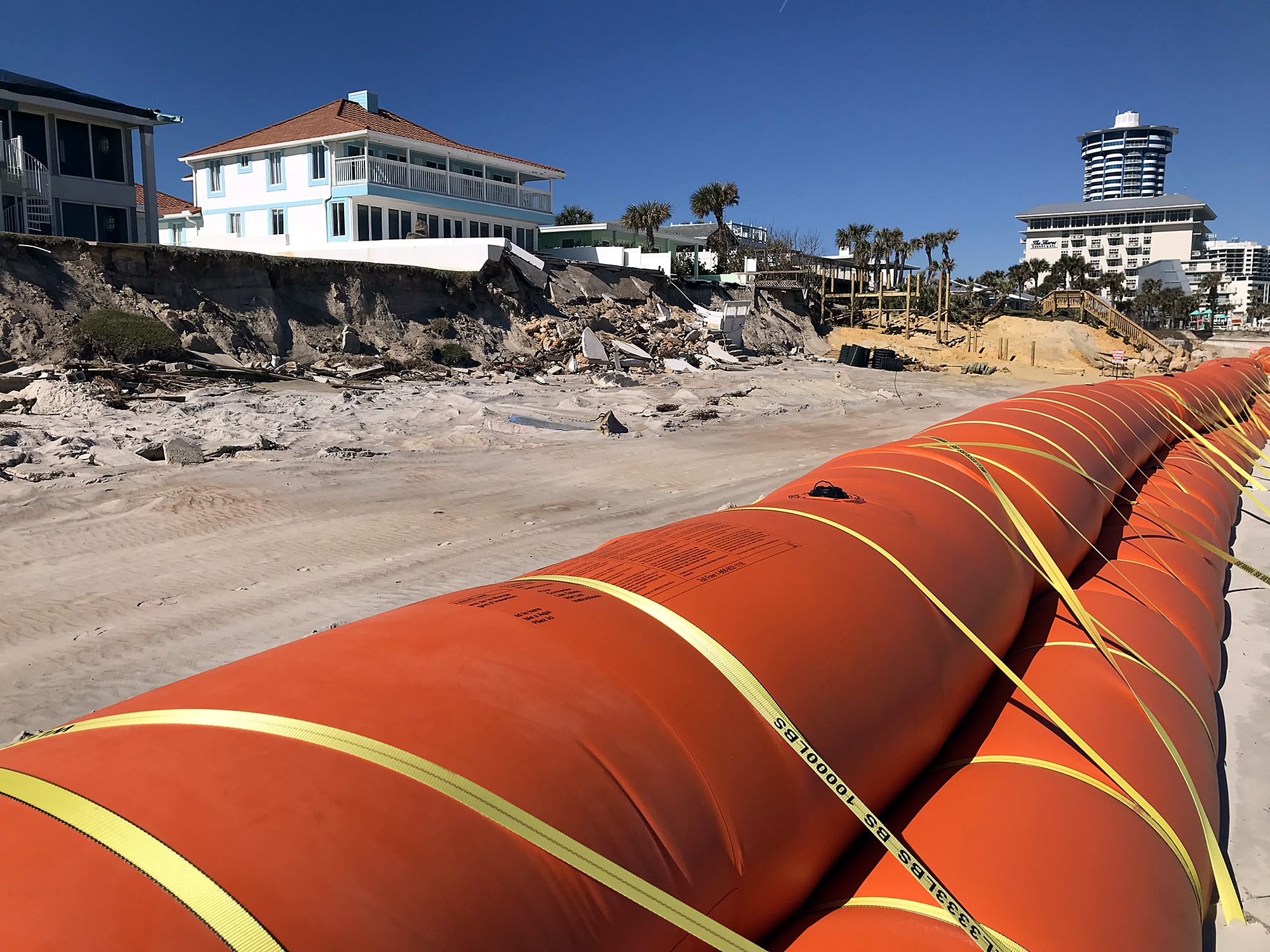
Tubes were stacked in a pyramid — two on the base, one on top — and laid on the sand at the foot of the bluff as a temporary revetment, bound with yellow straps and run in a continuous line for hundreds of yards across more than one property. An excavator, a skid steer and utility vehicles supported the crew of roughly ten to fifteen people.
- Facility type
- Oceanfront residential frontage, multiple properties
- Location
- Daytona Beach, Florida
- Dates
- November 8 – 12, 2022Working dates — pending confirmation
- Risk profile
- Surf washing over an eroded dune line and undercutting foundations of multi-story beach houses — a wave-action problem, not a still-water problem.
What the photographs show
The site as it stood.
The photographs show the barrier standing three and a half to four and a half feet high with dry sand and bluff behind it while surf washes the flat beach adjacent to the line. Prior dune erosion and an undermined, damaged concrete pool are visible above the barrier, which is what the alignment was set against. Later overtopping cannot be determined from the photographs.
Scope of work
- Pyramid stack (two base tubes, one on top) laid on the beach below the bluff
- Continuous run of several hundred yards across multiple frontages
- Heavy equipment support: excavator, skid steer and utility vehicles
- Crew of roughly ten to fifteen people working the shoreline alignment
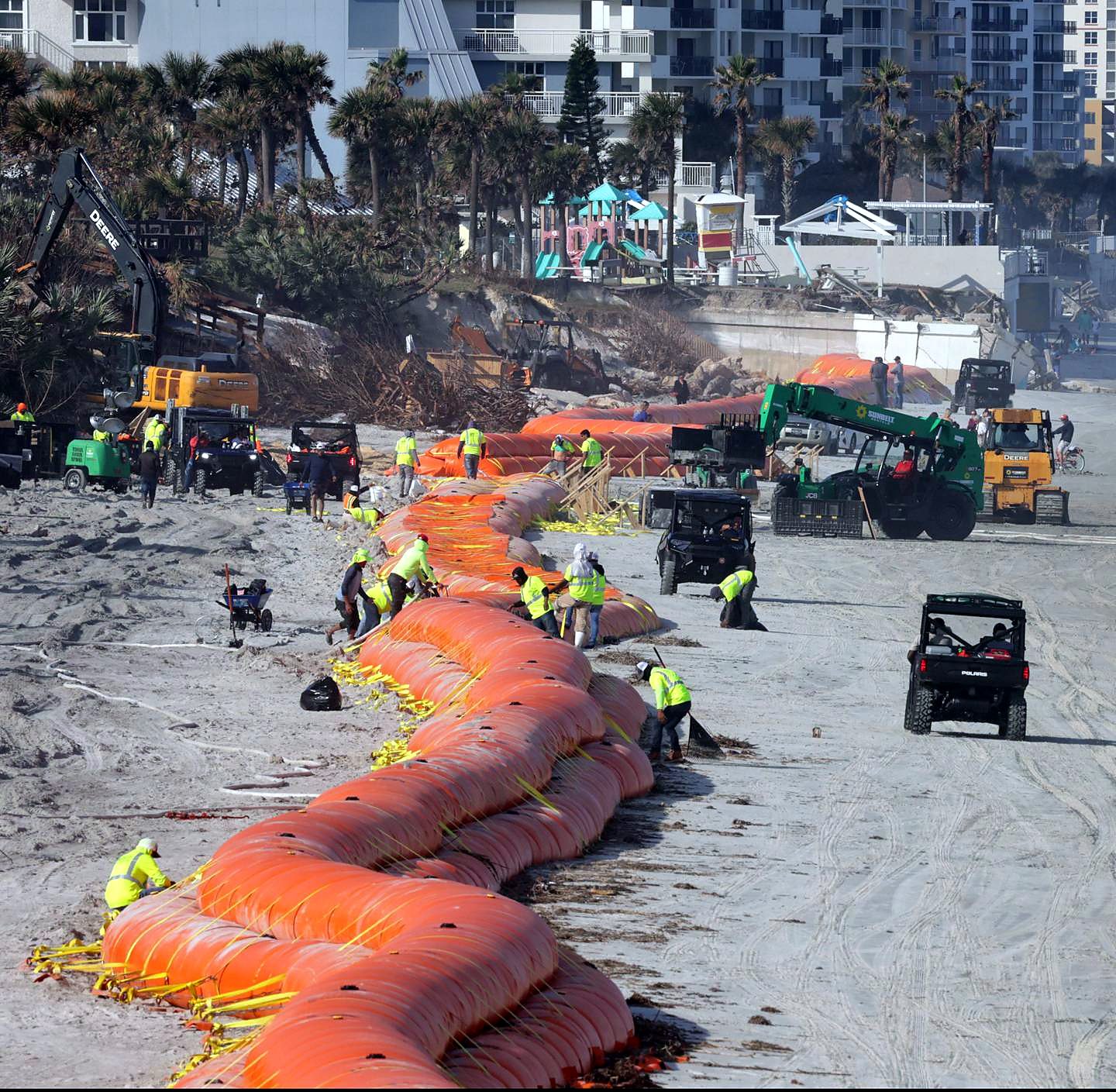
Crew and equipment working the shoreline alignment.
What is still open on this project
Photographs show a deployment. They do not show permission, dates or measured results. Those items are listed here and published the moment the client confirms them.
Open items
- Permission to name the properties or the association that contracted the work
- Whether the bluff held through the subsequent season
- Total linear feet and duration of the deployment
- The dates shown are working placeholders, not a confirmed deployment record.
Industry
Region
Next step
Build the flood plan before you need it.
Talk to us about your property, its flood exposure, the equipment you already own and what deployment would actually require onsite.